Product Link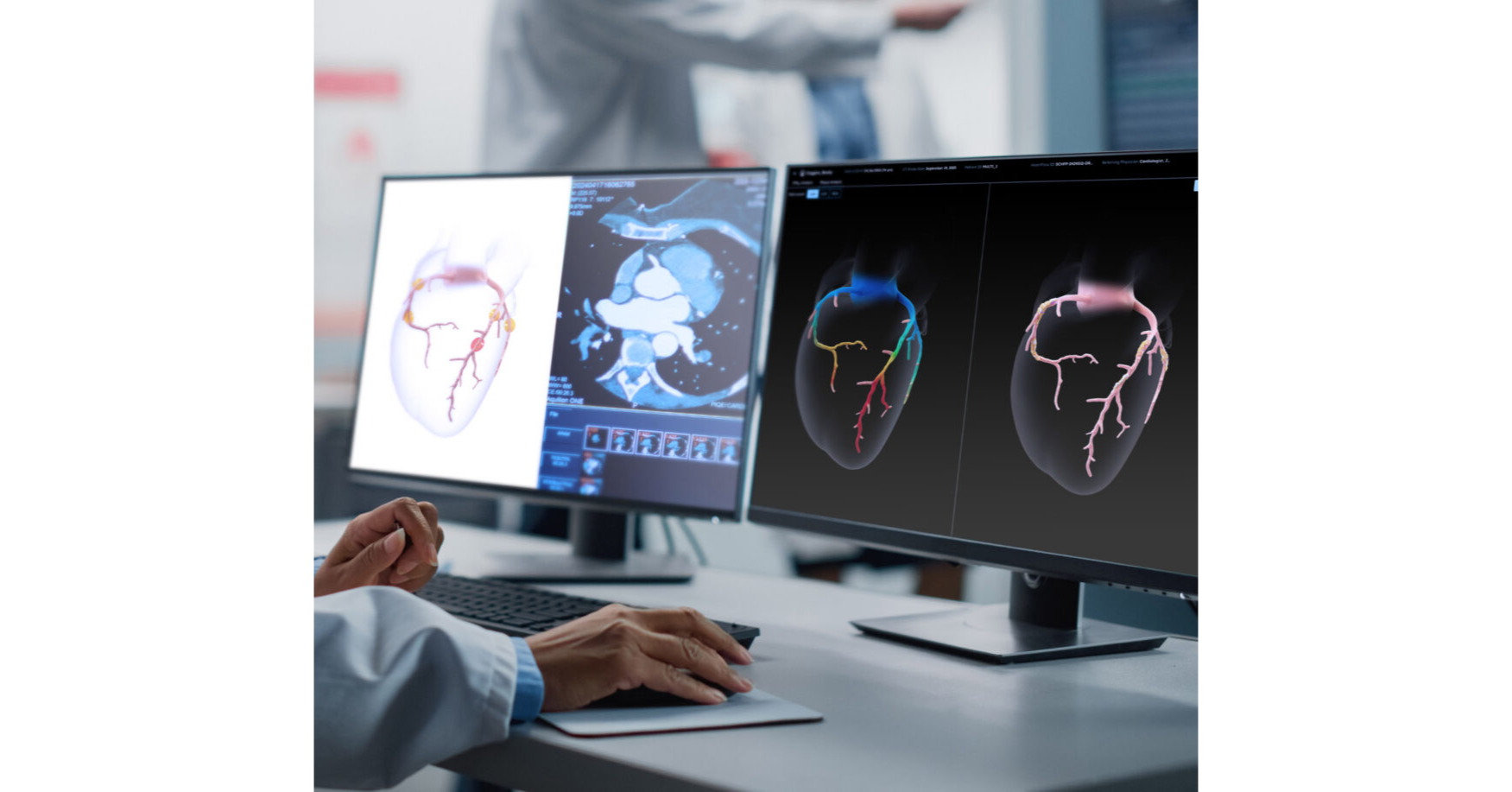
 My Rx Pad
Email this list with product links
No Data Available
HeartFlow One
By: HeartFlow
AI‑enabled coronary CTA analysis platform creating personalised 3D heart models for CAD diagnosis and management
A cloud‑based cardiovascular imaging analysis platform that transforms coronary computed tomography angiography (CCTA) scans into personalised, dynamic three‑dimensional models of a patient’s coronary anatomy and physiology. The system applies artificial intelligence and computational methods to enable consistent, non‑invasive assessment of coronary artery disease (CAD), including functional impact on blood flow, plaque burden and distribution, and anatomical visualisation. Results are integrated into clinical workflows via picture archiving and communication systems (PACS) and electronic medical records (EMR) to support diagnosis, risk stratification, and treatment planning.

Transforms standard CCTA images into personalised 3D coronary models.
Roadmap™ Analysis for consistent, detailed identification of coronary disease.
FFRCT Analysis to assess physiologic impact of coronary lesions on blood flow.
Plaque Analysis to quantify and characterize atherosclerotic plaque.
Integrated delivery of analyzed data into PACS and EMR workflows.
Cloud‑based secure processing with typical turnaround on the order of about 90 minutes.
Supports clinical decision‑making for diagnosis, revascularization planning, and disease management.
- There are many technologies in the marketplace, but the HeartFlow Analysis instills confidence in cardiologists and patients that they have selected the best diagnostic and treatment care pathway. HeartFlow’s technical competitors are the traditional diagnostic methods currently in place to diagnose and treat CAD.
Currently, cardiologists use exercise stress tests, SPECT and stress echocardiograms. However, the use of those diagnostic methods at the start of the treatment pathway can lead to 20 to 30% of patients being sent home without their disease detected.
Additionally, 55% of patients undergo invasive angiograms and later discover they don’t have obstructive CAD. These inefficiencies cost the patient time, money and peace of mind -- and similarly, the healthcare system spends quality resources. The HeartFlow Analysis’ approach addresses head on those areas of concern.
HeartFlow’s technology has proven to reduce the number of unnecessary tests and procedures, reducing overall cost to both hospitals and patients as a result. One-year trial results from the PLATFORM study found the HeartFlow-guided strategy reduced the overall costs to the healthcare system by more than $3,000 per patient after one year. The mean one-year per patient cost for the usual care strategy was $12,145 compared to the $8,794 cost of the HeartFlow-guided strategy. When factoring in a Medicare reimbursement rate of $950 for the HeartFlow Analysis, the healthcare system could save over an estimated $2B annually.
- There are many technologies in the marketplace, but the HeartFlow Analysis instills confidence in cardiologists and patients that they have selected the best diagnostic and treatment care pathway. HeartFlow’s technical competitors are the traditional diagnostic methods currently in place to diagnose and treat CAD.
- Cardiology
- Heart/ Blood Vessels
- Clinicians
- Released
- Software and Apps
- iOS
- Disease Management
- Hospital Outpatient, Hospital Inpatient
- Laboratory & Diagnostics, Data Analysis
- Digital Health Hub Quarterfinalist (2025)
- The HeartFlow Analysis has the highest diagnostic performance compared to other diagnostic tests, including CCTA alone, invasive angiograms, PET, CT perfusion and SPECT. HeartFlow’s innovations are the subject of more than 400 issued patents worldwide and over 425 peer-reviewed publications specific to the HeartFlow Analysis in prominent peer-reviewed medical journals. HeartFlow’s extensive evaluation and performance enables cardiologists to confidently identify the most appropriate treatment pathway for each patient.
PLATFORM one-year trial results showed an 83% reduction of unnecessary angiograms and zero adverse clinical events, which led to patients experiencing an improvement in quality of life. An example of this in action is through a HeartFlow patient, Dennis, a firefighter for more than 24 years. He began experiencing severe shortness of breath and fatigue and thought it was because of his age. During his annual physical, clinicians identified potential cardiac abnormalities and referred him for further consultation.
He received HeartFlow Analysis which showed he had a severe blockage requiring a stent. Dennis immediately noticed the difference in how he felt. “When I walked into the hospital from the parking garage, I was huffing and puffing. When I walked out of the hospital eight hours later, I felt like I could run through that garage," said Dennis. "There’s no doubt in my mind that this analysis saved my life. I feel like I’m thirty years old again.”
You can view Dennis' story here
- The HeartFlow Analysis has the highest diagnostic performance compared to other diagnostic tests, including CCTA alone, invasive angiograms, PET, CT perfusion and SPECT. HeartFlow’s innovations are the subject of more than 400 issued patents worldwide and over 425 peer-reviewed publications specific to the HeartFlow Analysis in prominent peer-reviewed medical journals. HeartFlow’s extensive evaluation and performance enables cardiologists to confidently identify the most appropriate treatment pathway for each patient.
- --
.png)
Awards and Recognition

 Digital Health Hub Quarterfinalist (2025)
Write a Review
Related Products